Chablis Food and Wine Pairings: The Complete Guide
Reading time: 7 minutes
Chablis is one of the most versatile white wines for dining. Its minerality, freshness, and natural elegance make it a remarkable companion for a wide variety of dishes — far beyond the classic oyster-Chablis pairing.
Here is our guide to finding the perfect pairing for each appellation in our range.
The fundamental principle: harmony and complementarity
Before detailing each pairing, let's recall a simple rule: a good food and wine pairing is based on balance. Neither the dish nor the wine should overpower the other. The two should reveal each other.
Chablis wines, vinified in stainless steel tanks, have a precious advantage at the table: their aromatic purity. Without the oak woodiness, they never conflict with the flavors of the food. They accompany, emphasize, and prolong — without ever imposing.
Petit Chablis — Freshness for aperitifs and everyday enjoyment
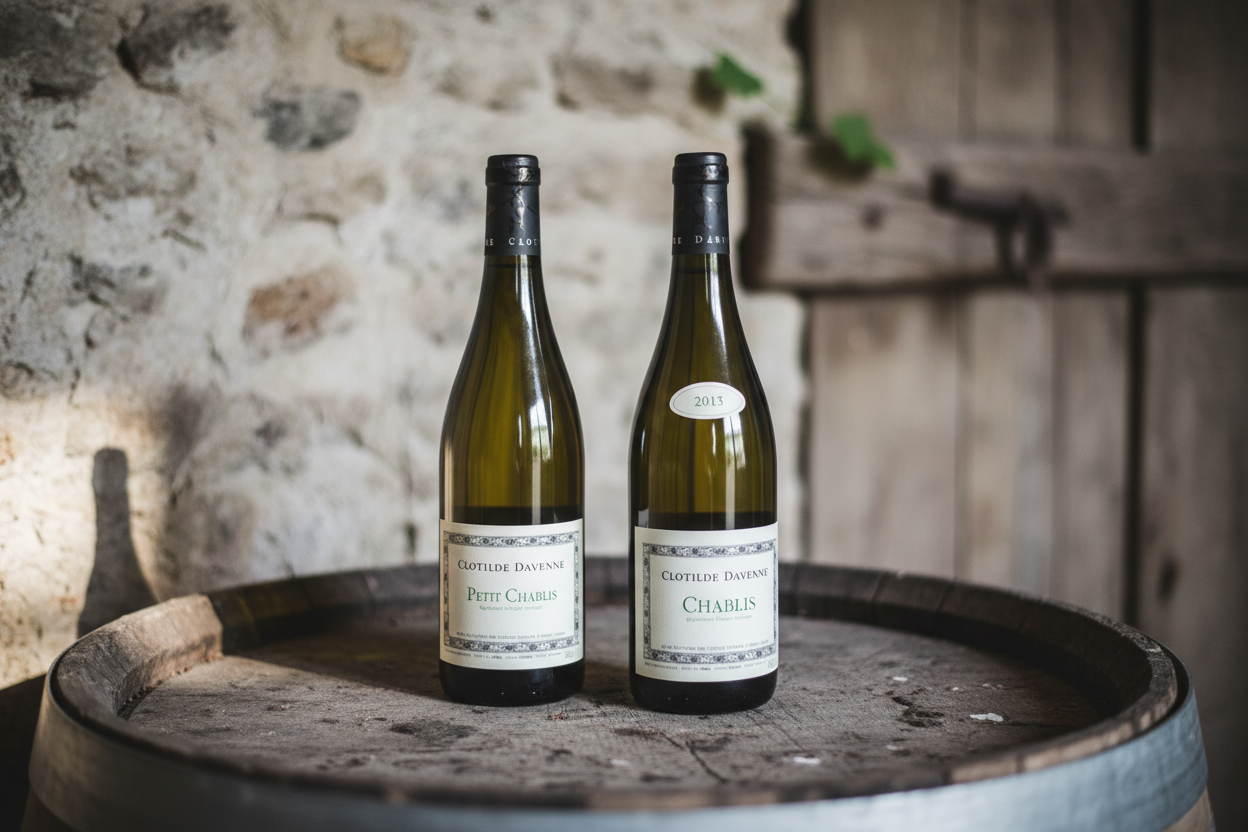
Our Petit Chablis "Les Temps Perdus" is a lively, light, and thirst-quenching wine. It is the ideal companion for simple moments and casual meals.
Recommended pairings
- Aperitif — on its own or with cheese gougères, fish rillettes, grey shrimp.
- Seafood — whelks, periwinkles, shrimp, seafood platter as a starter.
- Mixed salads — warm goat cheese salad, Salade Niçoise, herbal tabbouleh.
- Light fish — sole meunière fillet, grilled sardines, sea bream tartare.
- Asian cuisine — sushi, maki, vegetable tempura, light pad Thai.
Serving temperature: 8-10°C — cool but not ice-cold, to preserve the aromatic expression.
Chablis — Versatile elegance
Our Chablis village wine is a complete terroir wine: mineral, fruity, with a beautiful length. It adapts to a remarkable range of cuisines.
Recommended pairings
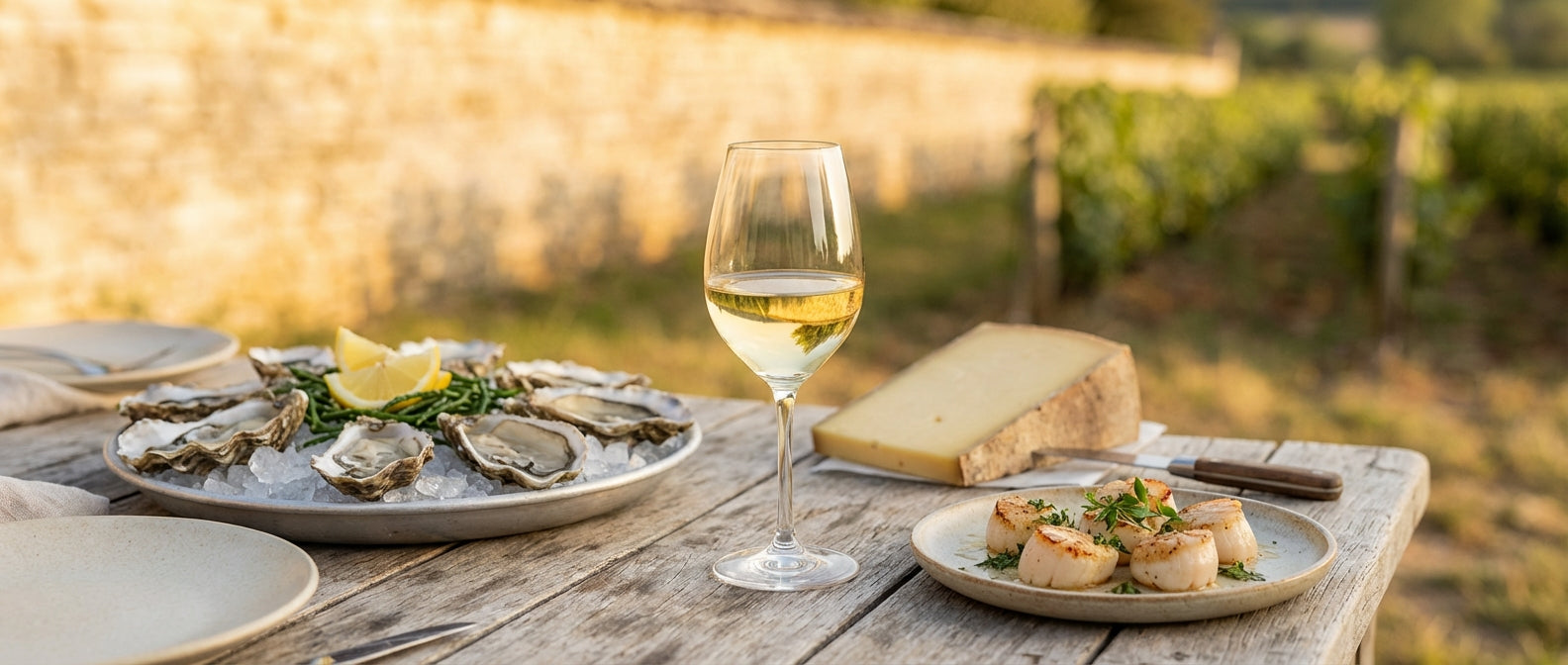
- Oysters — the mythical pairing. Oysters from Brittany or Normandy, with their iodized salinity, find their perfect mirror in Chablis.
- Noble fish — grilled sea bass, roasted turbot, monkfish in cream sauce, pike-perch with beurre blanc.
- Poultry in white sauce — blanquette de veau, chicken in cream sauce, rabbit in mustard sauce.
- Goat cheeses — Crottin de Chavignol, Sainte-Maure-de-Touraine, Charolais.
- Mediterranean cuisine — seafood risotto, clam pasta, salt cod brandade.
Serving temperature: 10-12°C.
Chablis Premier Cru — Complexity for gastronomy
Our Premiers Crus — Vaucoupin, Montmains, Fourchaume, Vaillons — offer additional complexity: more depth, more nuances, more length. These are gastronomic wines in the fullest sense of the term.
Each climate, its personality at the table
Vaucoupin — taut and mineral, it excels with crustaceans: grilled lobster, roasted langoustines, crab with mayonnaise.
Montmains — ample and complex (cited in the World Atlas of Wine), it magnificently accompanies fish in sauce: sole Normande, monkfish with saffron, pike quenelles with Nantua sauce.
Fourchaume — generous and sunny, it pairs with roasted poultry: roasted Bresse chicken, guinea fowl with girolles, Christmas capon.
Vaillons — fine and floral, it enhances delicate preparations: pan-seared scallops, sea bass ceviche, langoustine tartare.
Other pairings for Premiers Crus
- Aged cheeses — Comté 18 months, Époisses (a bold but remarkable pairing), Alpine Beaufort.
- Refined Japanese cuisine — quality sashimi, shrimp tempura, chirashi.
- Terrines and pâtés — semi-cooked foie gras terrine (a surprising and elegant pairing).
Serving temperature: 11-13°C — slightly less chilled to allow the complexity to express itself.
Chablis Grand Cru — The peak of pairing
Our Grands Crus — Bougros, Les Clos, Blanchots — are exceptional wines that deserve dishes of equal stature. Concentrated, deep, with intense minerality and remarkable aging potential, they call for highly precise cuisine.
Recommended pairings
- Lobster — roasted with semi-salted butter, Thermidor, or simply grilled. The ultimate pairing.
- Veal sweetbreads — pan-fried with morels, en croûte, or braised in jus.
- Mature noble fish — whole roasted turbot, salt-crusted line-caught sea bass.
- Exceptional poultry — Bresse pullet in "demi-deuil" style, truffled capon.
- Foie gras — plain semi-cooked, in terrine, or pan-fried (with an older Grand Cru).
- Strong cheeses — Comté 24-36 months, aged Swiss Gruyère, aged Parmesan.
Serving temperature: 12-14°C — allow the wine to breathe, possibly in a Burgundy glass to concentrate the aromas.
Beyond Chablis: our other appellations at the table
Bourgogne Aligoté — 75-year-old vines
Lively and citrusy, this is the wine for the traditional kir (with Dijon blackcurrant liqueur), but also an excellent companion for Burgundy snails, fried fish, and light vegetarian dishes.
Saint-Bris — Sauvignon Blanc, century-old vines
Our Saint-Bris Vieilles Vignes, from vines nearly 100 years old, offers intense aromatics. It pairs with fresh goat cheeses, asparagus (a difficult pairing that Sauvignon successfully manages), and aromatic herb salads.
Irancy — Characterful Pinot Noir
Our red Burgundy accompanies meats in sauce: Boeuf Bourguignon, Coq au Vin, braised beef cheek, but also fine charcuterie and soft cheeses like Soumaintrain or Époisses.
Crémant de Bourgogne
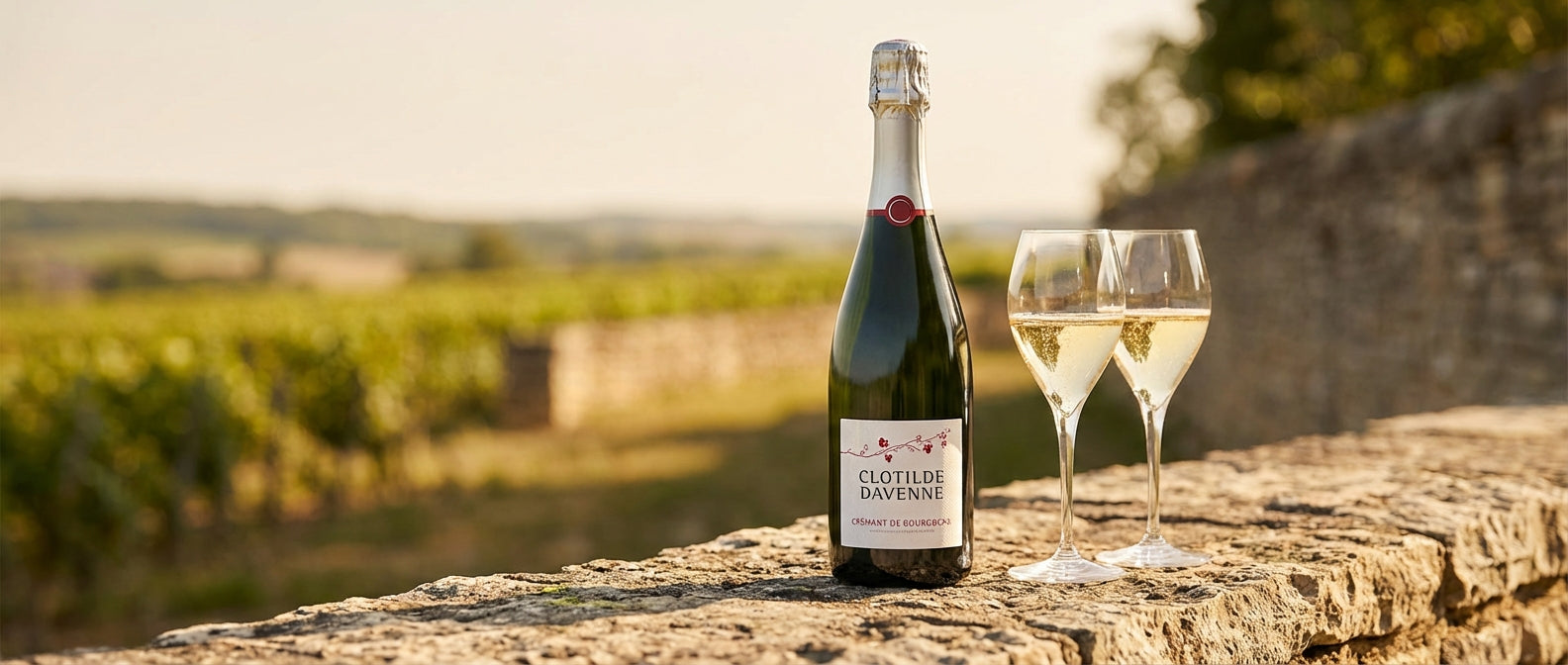
Our Crémants — Extra Brut, Rosé, and L'Élégante — are the kings of the aperitif. But don't limit them to this role: an Extra Brut Crémant wonderfully accompanies a seafood platter, a creamy risotto, or even a not-too-sweet white fruit dessert.
Our practical tips for successful pairings
- Serve at the right temperature — a wine that is too cold loses its aromas, too warm it becomes flabby. Take the bottle out of the refrigerator 15 to 20 minutes before serving.
- Go upmarket with the meal — start with a Petit Chablis for the aperitif, move on to Chablis with the starter, then to a Premier or Grand Cru with the main course.
- Dare to contrast — the minerality of Chablis can balance rich or creamy dishes. Don't hesitate to try audacious combinations.
- Adapt to the vintage — a young Chablis will be livelier and suitable for raw fish; an older Chablis, more complex, will call for cooked dishes.
- Trust your palate — rules are guides, not laws. The best pairing is the one that brings you pleasure.
Want to create your own food and wine pairing experience? Explore our complete range and let your curiosity guide you — from Petit Chablis to Grand Cru, every bottle has its place at your table.