Article: All about Chablis: The complete guide to this white Burgundy wine
All about Chablis: The complete guide to this white Burgundy wine
Reading time: 8 minutes
Chablis is one of those names that, on its own, evokes an entire universe: the freshness of a mineral white wine, the hills of Burgundy, a thousand-year-old terroir. Yet, behind this world-renowned appellation lies a reality richer and more nuanced than it seems.
Whether you're discovering Chablis for the first time or want to deepen your knowledge, this guide will accompany you through everything you need to know — from the terroir to the glass.
What is Chablis?
Chablis is a dry white wine produced in the northern part of Burgundy, around the small town of the same name, in the Yonne department. It is made exclusively from the Chardonnay grape variety.
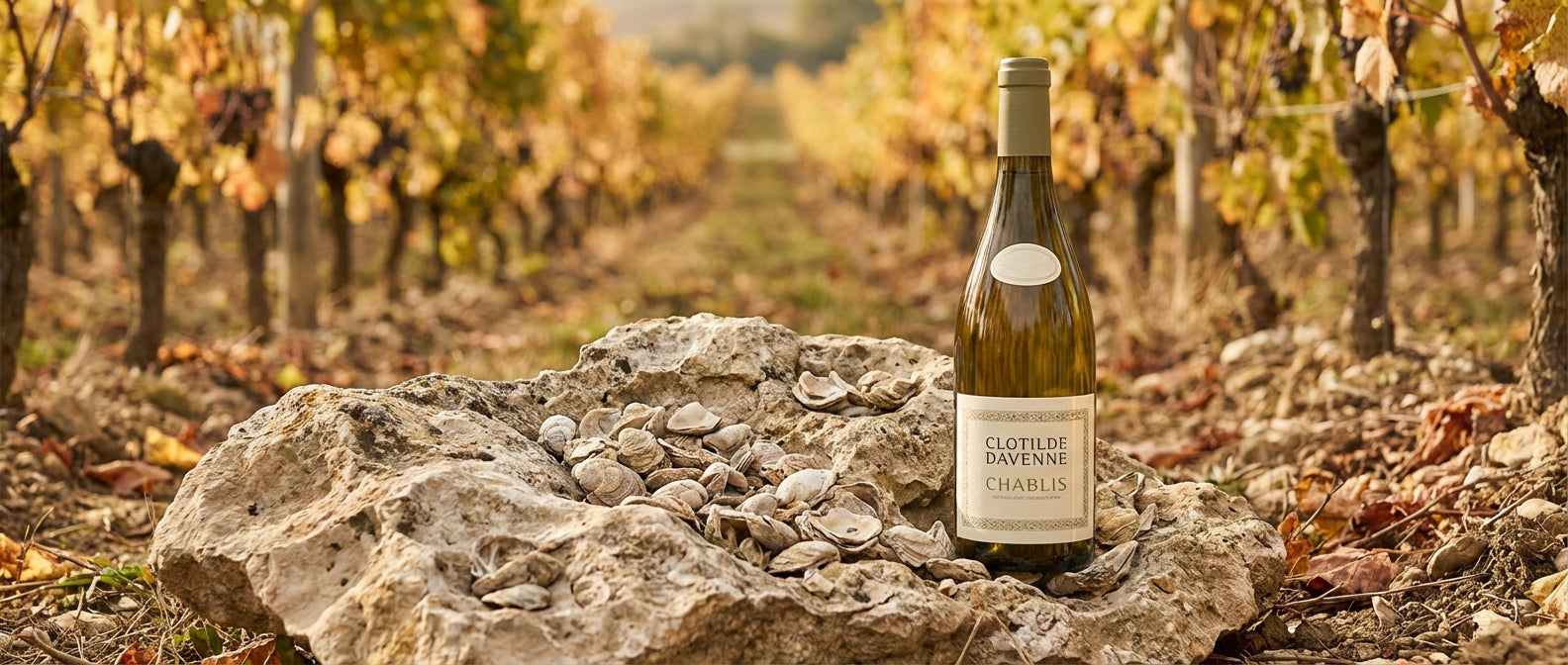
What distinguishes Chablis from other Chardonnays in the world — and even from other white Burgundies — is its unique terroir. The vineyard rests on Kimmeridgian soils, limestone marls 150 million years old, dotted with oyster fossils. This singular geology gives the wines a minerality, freshness, and tension found nowhere else.
The four Chablis appellations
The Chablis appellation is divided into four levels, from the most accessible to the most prestigious. Each corresponds to a different terroir, exposure, and depth.
Petit Chablis
Coming from the highest plateaus, on Portlandian soils (harder limestone), Petit Chablis is a lively, light, and refreshing wine. It's the ideal introduction: fresh, clean, with notes of citrus and green apple. It should be enjoyed young, as an aperitif or with seafood.
At the estate, our Petit Chablis "Les Temps Perdus" comes from the historic plot planted in 1992 by Clotilde — the one that gave its name to the estate.
Chablis
The village appellation, the heart of production. The vines are planted on Kimmeridgian hillsides, which gives wines that are more complex and longer-lasting than Petit Chablis. Here you'll find the classic signature: minerality, notes of gunflint, white flowers, ripe citrus. A Chablis village generally keeps for 3 to 5 years.
Chablis Premier Cru
Chablis has 40 climats classified as Premier Cru, grouped into 17 main names. These plots benefit from privileged exposures and particularly expressive soils. The result: wines of superior complexity, with more depth, concentration, and aging potential (5 to 10 years, sometimes more).
Among the most renowned:
- Montmains — mineral and full-bodied, cited in Jancis Robinson's World Atlas of Wine
- Fourchaume — generous and sunny, one of the best known
- Vaucoupin — taut and precise, awarded a star in the Guide Hachette 2025
- Vaillons — delicate and floral, with great elegance
At the estate, we are fortunate to work with these four climats. Each tells a different story of the same terroir.
Chablis Grand Cru
The pinnacle of the hierarchy. Only seven climats bear this title, all located on a single hill facing south-southwest, overlooking the town of Chablis:
- Blanchots
- Bougros — 2 stars Guide Hachette (2012 vintage)
- Les Clos — the largest and most famous
- Grenouilles
- Preuses
- Valmur
- Vaudésir
Grand Crus produce wines of remarkable intensity and depth, capable of aging for 10 to 20 years. We produce the Bougros, Les Clos, and Blanchots cuvées.
The terroir: why Chablis is unique
Kimmeridgian soil
150 million years ago, the Chablis region was covered by a shallow sea. Deposits of limestone, clay, and fossilized shells formed the Kimmeridgian marls — the geological foundation that gives Chablis its distinctive minerality.
If you walk through our vineyards in Préhy, you'll see these small oyster fossils (Exogyra virgula) appearing on the surface. A tangible reminder of this extraordinary geological history.
The climate
Chablis benefits from a semi-continental climate, with cold winters and moderate summers. This climate preserves the natural acidity of the grapes and contributes to the freshness that is the hallmark of the appellation's wines. The downside: spring frosts, which regularly threaten the buds and can significantly reduce harvests.
Chardonnay, and only Chardonnay
Chablis is a single-varietal wine: only Chardonnay is permitted. But Chablis Chardonnay has nothing to do with that of California or Australia. Here, the grape variety recedes behind the terroir. No tropical roundness or pronounced oakiness — it is stone, fresh fruit, and tension that dominate.
How is Chablis made?
The winemaking of Chablis varies from one estate to another. The great historical debate pits advocates of oak barrels (which bring wood, vanilla, and complexity) against those of stainless steel tanks (which preserve purity and minerality).
At Domaine Les Temps Perdus, we have made a clear choice: complete vinification in stainless steel tanks, without any oak barrels. This is not a compromise — it's a conviction. After more than 35 years of winemaking in Chablis, Clotilde is convinced that this terroir is expressive enough to do without any artifice.
However, we do carry out malolactic fermentation on all our wines, which brings them additional complexity and roundness, while preserving their freshness.
How to taste a Chablis
Serving temperature
- Petit Chablis: 8-10°C — well chilled
- Chablis village: 10-12°C
- Premier Cru: 11-13°C — slightly less chilled for complexity
- Grand Cru: 12-14°C — let it breathe
The glass
A classic white wine glass is perfectly suitable for Petit Chablis and Chablis village. For Premiers and Grands Crus, a Burgundy glass (wider) will allow the aromas to develop fully.
What to look for in the glass
- The color — pale gold with green reflections in its youth, evolving towards a deeper gold with age.
- The nose — citrus, white flowers, gunflint, chalk. With age: honey, hazelnut, mushroom.
- The palate — mineral tension is key. Look for that saline sensation on the finish, that impression that the wine "vibrates" on your palate.
Chablis at the table
Chablis is one of the most versatile white wines for food and wine pairings:
- The absolute classic — oysters. The salty iodine of oysters and the minerality of Chablis echo each other.
- Seafood and fish — shrimp, langoustines, grilled sea bass, sole meunière.
- Poultry — roast chicken, veal blanquette (especially with a Premier Cru).
- Cheeses — fresh goat cheese, Comté, Époisses (audacious but remarkable pairing with a Grand Cru).
- Japanese cuisine — sushi, sashimi, tempura. The purity of Chablis vinified in stainless steel naturally pairs with Japanese cuisine.
Choosing your Chablis: our advice
How to navigate the diversity of offerings? Here are some benchmarks:
- For an aperitif or a light meal — a Petit Chablis or a young Chablis village (1-3 years old).
- For a gourmet dinner — a Premier Cru or a Grand Cru a few years old.
- For a gift — a Grand Cru is always a remarkable gesture. Our Chablis Grand Cru Bougros, distinguished by the Guide Hachette, is a safe bet.
- To discover — start with a Chablis village; it's the best balance between accessibility and expression of terroir.
- Look at the vinification — a Chablis vinified in stainless steel (like ours) will be purer and more mineral; a Chablis aged in barrels will be rounder and more complex. Both approaches have their merits — it's a matter of taste.
Chablis and other wines of the region
The Chablis vineyard does not only produce Chablis. The region also offers:
- Saint-Bris — the only appellation in Burgundy made from Sauvignon Blanc. Our century-old vines produce a Saint-Bris Vieilles Vignes of rare intensity.
- Irancy — a red Pinot Noir (sometimes blended with César, a local grape) with aromas of red fruits and spices.
- Bourgogne Aligoté — the grape variety for traditional Kir. Our 75-year-old vines produce an Aligoté of unusual depth.
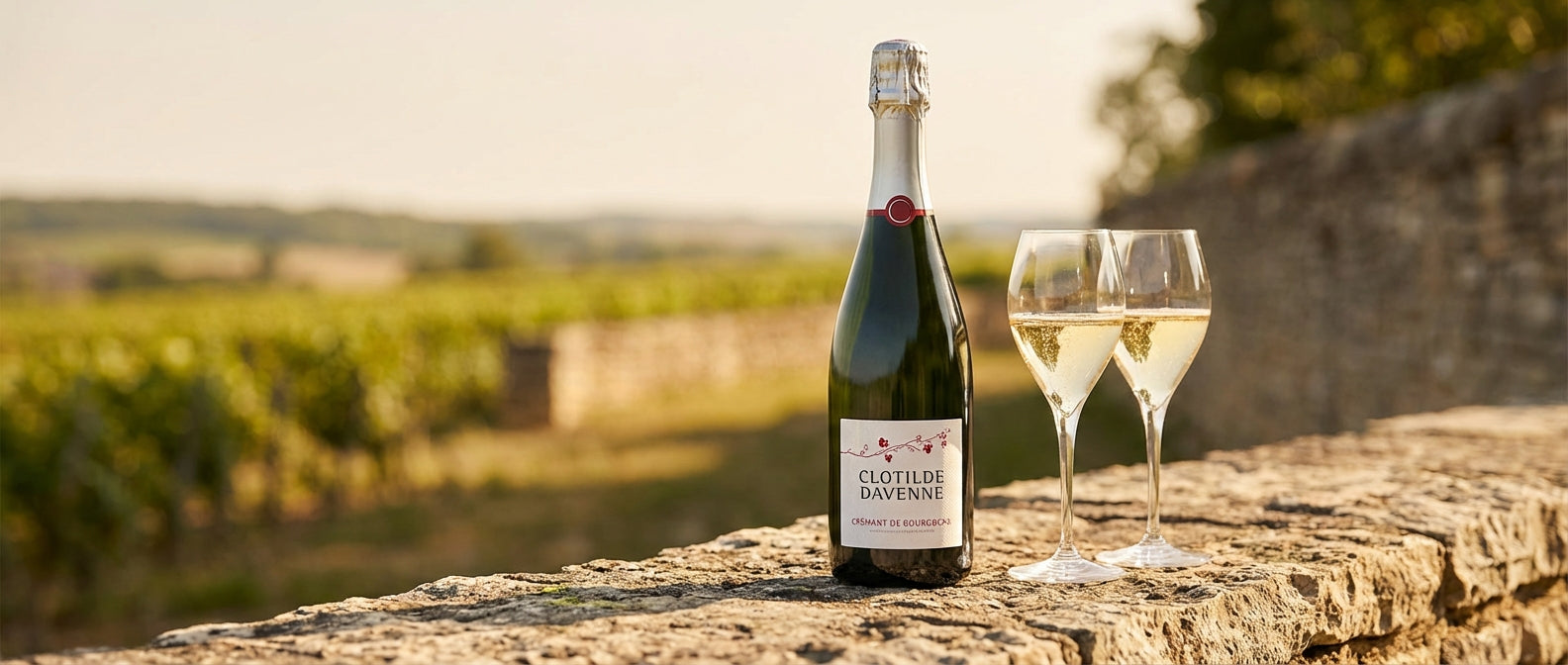
- Crémant de Bourgogne — the sparkling Burgundy wine, made using the traditional method. Our "L'Élégante" cuvée is listed in the Guide Hachette.
Visiting Chablis
The best way to understand Chablis is to come and taste it on site. At the estate, we offer guided tours followed by a tasting of 6 wines — from Petit Chablis to Grand Cru, including our Saint-Bris, Irancy, and Crémants.
Our shop in the center of Chablis welcomes you from Monday to Saturday. Géraldine, Arnaud, and Chantale will be delighted to guide you in discovering our cuvées.
You now know everything you need to fully appreciate a Chablis. The most important thing remains: to taste it. Explore our complete range and let the terroir tell you its story.